
Temp-to-Hire vs. Direct Hire: Which Hiring Strategy Saves More Money?

Updated: Aug 20

Hiring the right employee is one of the most important investments a business can make. Whether you're replacing a key team member, expanding your workforce, or preparing for seasonal growth, choosing the right hiring strategy can significantly impact your bottom line.
Two of the most common hiring models are Temp-to-Hire and Direct Hire. While both can help you build a strong workforce, each serves a different purpose and offers unique financial advantages.
So which one saves more money?
The answer depends on your business goals, hiring urgency, and tolerance for risk.
At OneSource Employment Solutions, we help employers throughout Santa Cruz County, Monterey County, Silicon Valley, and the greater Bay Area determine the best hiring strategy based on their unique workforce needs.
Understanding the Difference
What Is Temp-to-Hire?
Temp-to-Hire allows a company to evaluate an employee on the job before making a permanent hiring decision.
The employee works through OneSource Employment Solutions during the evaluation period while we manage:
Payroll
Workers' Compensation
Employment Taxes
HR Administration
Employment Documentation
Compliance
If both the employer and employee determine it's the right fit, the employee transitions to the company's payroll.
Think of it as a working interview.
What Is Direct Hire?
With Direct Hire recruiting, the employee is hired permanently from day one.
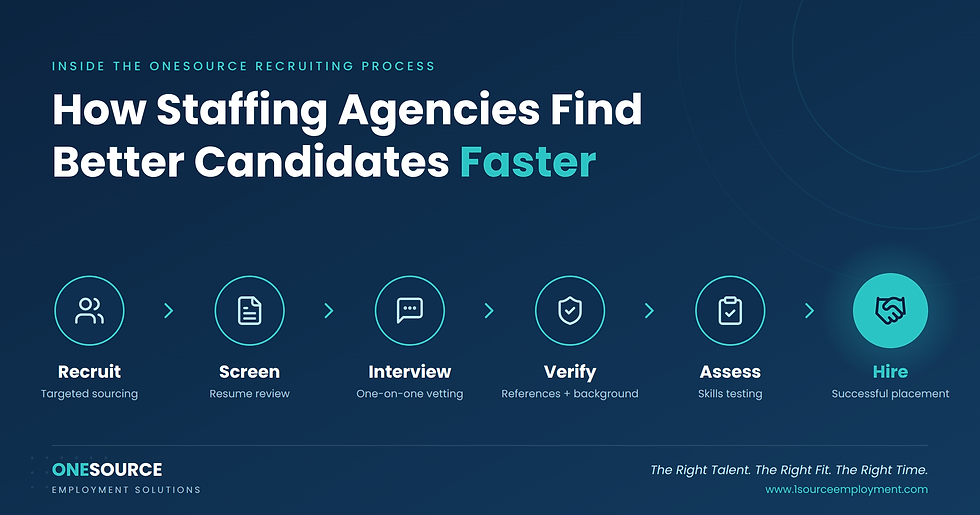
OneSource handles the recruiting process by:
Advertising the position
Recruiting candidates
Resume screening
Interviews
Candidate qualification
Reference verification
Presenting the strongest candidates
Once the employer selects their candidate, they become a direct employee of the company.
Cost Comparison
Expense | Temp-to-Hire | Direct Hire |
Recruiting | ✔ Included | ✔ Included |
Payroll Administration | ✔ Included | Employer Responsibility |
Workers' Compensation | ✔ Included | Employer Responsibility |
Employment Taxes | ✔ Included | Employer Responsibility |
HR Administration | ✔ Included | Employer Responsibility |
Hiring Risk | Lower | Higher |
Immediate Employee Ownership | After Conversion | Day One |
When Temp-to-Hire Saves More Money
Temp-to-Hire is often the better financial decision when hiring uncertainty exists.
1. You Need to Reduce Hiring Risk
A bad hire can be expensive.
Beyond recruiting costs, employers often lose:
Productivity
Training investments
Management time
Team morale
Customer confidence
Temp-to-Hire gives you the opportunity to evaluate a candidate's:
Attendance
Work ethic
Communication
Technical skills
Reliability
Cultural fit
before extending a permanent offer.
2. You Need Employees Quickly
Hiring internally often takes weeks.
OneSource maintains an active pipeline of qualified candidates, allowing businesses to fill positions significantly faster.
Instead of waiting for applicants, interviewing dozens of candidates, and completing onboarding yourself, we handle much of the process so you can focus on running your business.
3. Your Business Has Seasonal Demand
Many California businesses experience workforce fluctuations.
Industries such as:
Agriculture
Manufacturing
Hospitality
Construction
Distribution
Retail
often need additional staff without long-term commitments.
Temp-to-Hire gives employers flexibility while maintaining productivity.
4. You Want Payroll Off Your Plate
One overlooked advantage of Temp-to-Hire is administrative savings.
OneSource manages:
Payroll processing
Employment taxes
Workers' Compensation
New hire documentation
HR compliance
Employment records
This significantly reduces administrative workload for employers.
When Direct Hire Makes More Sense
Although Temp-to-Hire offers flexibility, Direct Hire is often the best solution for strategic positions.
Examples include:
Executive Leadership
Accounting & Finance
Human Resources
Engineers
Software Developers
Insurance Professionals
Sales Executives
Operations Managers
These positions often require immediate long-term commitment.
Comparing the Total Cost of Hiring
Many employers focus only on salary.
However, hiring costs extend well beyond wages.
Consider the hidden expenses involved:
Internal Recruiting
Job advertisements
Resume review
Interview scheduling
Hiring manager time
Background screening
Candidate communication
Employee Onboarding
Payroll setup
Benefits enrollment
Tax documentation
Computer equipment
Training
Potential Turnover
If the employee leaves within the first six months, many of these expenses repeat.
Reducing turnover is one of the biggest financial advantages of choosing the right hiring strategy.
Which Option Has the Better ROI?
Choose Temp-to-Hire if you:
✔ Need employees quickly
✔ Want flexibility
✔ Are uncertain about long-term staffing levels
✔ Want to reduce hiring risk
✔ Prefer outsourcing payroll and HR administration
✔ Need seasonal staffing
Choose Direct Hire if you:
✔ Need a long-term employee immediately
✔ Are hiring executives or highly specialized professionals
✔ Already have established HR infrastructure
✔ Want the employee on your payroll from day one
How OneSource Employment Solutions Helps
Hiring isn't just about filling positions.
It's about finding employees who help your business grow.
Our recruiting specialists work closely with employers to understand:
Company culture
Technical requirements
Long-term goals
Growth plans
Workforce challenges
Whether you need one employee or an entire team, we tailor our recruiting strategy to fit your business.
Frequently Asked Questions
Is Temp-to-Hire more expensive?
Not necessarily.
While Temp-to-Hire includes payroll and employment administration, many employers save money by reducing turnover, avoiding bad hires, and lowering administrative costs.
How long does Temp-to-Hire usually last?
Evaluation periods vary depending on the position and employer's preferences. Many companies choose a period that gives enough time to assess performance before making a permanent hiring decision.
Can I hire a temporary employee permanently?
Yes. Once the agreed evaluation period is complete, employers may transition the employee to their payroll according to the staffing agreement.
Which industries benefit most from Temp-to-Hire?
Manufacturing, administrative, skilled trades, logistics, healthcare support, customer service, hospitality, construction, and many other industries can benefit from Temp-to-Hire staffing.
The Bottom Line
There isn't a one-size-fits-all hiring strategy.
The best choice depends on your company's goals, hiring timeline, budget, and risk tolerance.
For businesses seeking flexibility, reduced hiring risk, and streamlined administration, Temp-to-Hire often delivers the greatest value.
For organizations hiring long-term professionals or executive leadership, Direct Hire provides immediate workforce stability.
At OneSource Employment Solutions, we help employers evaluate both options and recommend the hiring strategy that aligns with their business objectives.
Whether you're hiring one employee or building an entire workforce, our recruiting specialists are ready to help you make the right investment.
Ready to Build Your Team?
Finding the right employee shouldn't slow your business down.
OneSource Employment Solutions provides flexible staffing, direct hire recruiting, payroll services, and workforce solutions that help California businesses hire with confidence.
Contact us today for a free workforce consultation and discover which hiring strategy is right for your business.


Comments